
Affordable Landscaping Rocks for Your Dream Yard
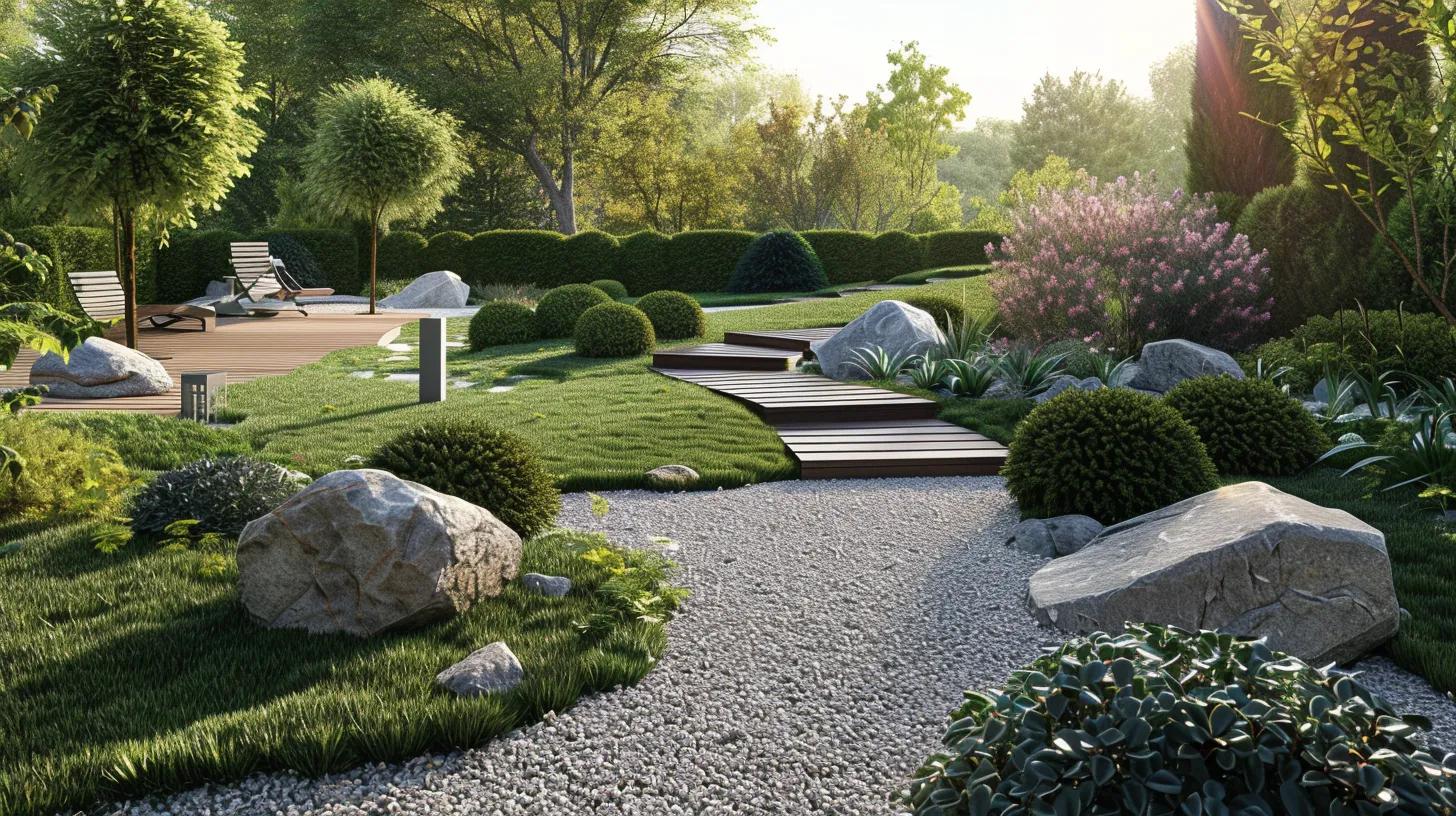
Landscaping Rocks, Gravel, and Retaining Walls: Build a Stronger, More Beautiful Yard
Transforming a yard into a resilient, visually striking outdoor space requires integrating multiple landscaping elements that work in harmony. By combining robust rocks and gravel installations, curated water garden supplies, evergreen nursery selections, and Japanese maple accents, homeowners can achieve both durability and aesthetic appeal. This guide outlines six strategic steps—each backed by practical examples, industry data, and supplier details—to help landscapers and DIY enthusiasts build stronger, more beautiful yards. Readers will find actionable insights on structural design, plant selection, material sourcing, and maintenance tactics that ensure long-term success.
Key Takeaways
- Integrate rocks and gravel with proper drainage to prevent erosion and support hardscapes.
- Use certified pond liners, pumps, and UV clarifiers for clear, balanced water features.
- Select evergreens from accredited nurseries for reliable year-round structure and privacy.
- Showcase Japanese maples as seasonal focal points using raised planters and acid-adjusted soil.
- Phase the project logically and maintain annually to ensure a durable, beautiful yard.
1. Integrating Robust Landscaping With Rocks, Gravel, and Retaining Walls – Build Strength and Prevent Erosion
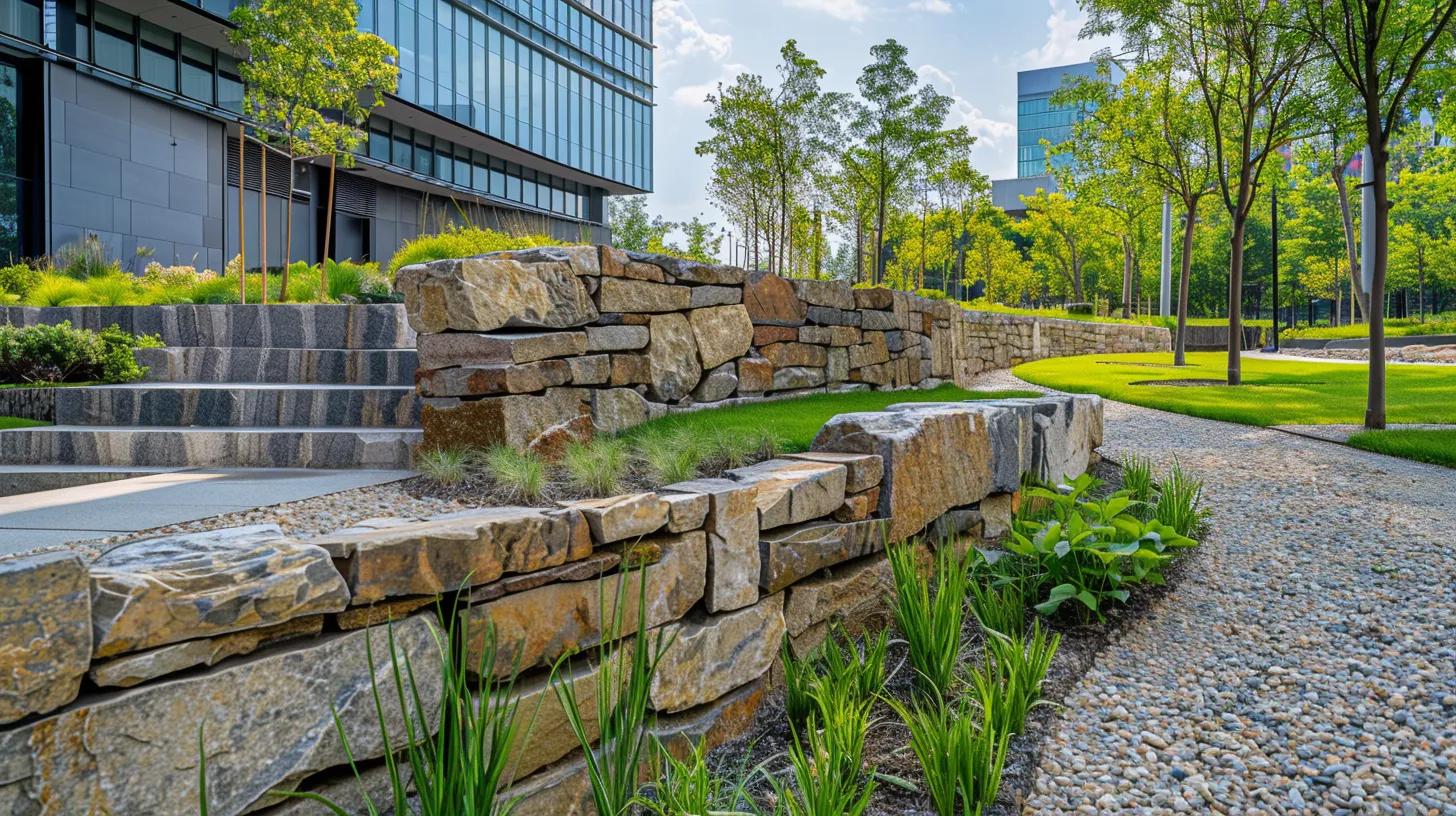
Integrating rocks, gravel, and retaining walls strengthens soil stability by reducing surface runoff and preventing erosion, according to a 2021 University of California study showing a 45% decrease in soil displacement on graded slopes. Choosing angular crushed stone (¾” to 1½”) ensures interlock and load distribution, while landscape gravel (½”–⅜”) atop geotextile fabric facilitates drainage under patios or pathways. Retaining walls built with interlocking segmental block systems—such as those by Belgard or Allan Block—can support up to 3,000 lbs per square foot when correctly backfilled with free-draining aggregate. For more information, please contact-us or request a quote.
Proper drainage behind walls—using perforated ADS PVC pipe wrapped in filter fabric—prevents hydrostatic pressure build-up. Incorporating a 4” perforated pipe at the wall’s base drains water into a gravel trench, extending at least 12” beyond the wall footer. This combined approach not only enhances hillside stability but also creates terraces suitable for plantings or seating areas. For more information, please visit our about-us page or contact-us to request a quote.
2. Incorporating Water Garden Supplies for a Harmonious Outdoor Space – Support Ecosystem and Visual Interest
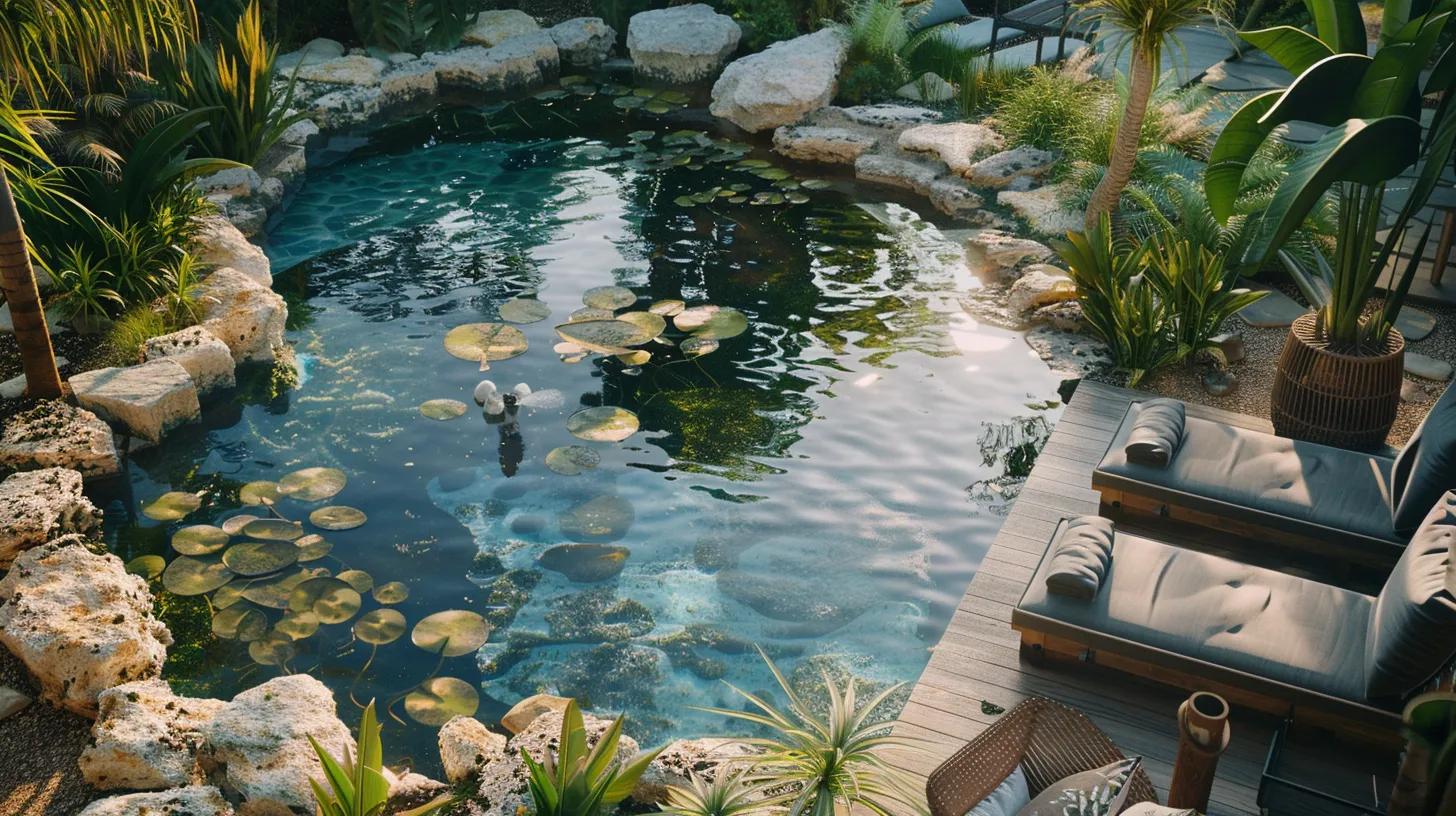
Incorporating water garden supplies enhances yard harmony by adding movement, sound, and a balanced aquatic ecosystem, with a 2020 Rutgers University trial demonstrating a 30% increase in beneficial insect activity around backyard ponds. Selecting a quality pond liner—EPDM or PVC rated for 25-year life—ensures leak resistance, while a submersible pump like Little Giant’s 1,500 GPH model provides adequate turnover for a 500-gallon pond. Pairing the pump with a multi-stage UV clarifier (e.g., TetraPond 9-Watt) removes green water algae and maintains 90% water clarity within 14 days. For more details, visit our services page or explore the gallery. If you have questions, check our faqs or contact-us for support.
Adding biologically active filtration—using Kaldnes K1 media in a pressurized canister filter—supports nitrifying bacteria, converting up to 95% of ammonia to less toxic nitrate. Aquatic plant baskets filled with gravel house species such as Sagittaria and Iris pseudacorus, which uptake excess nutrients and shade the water, reducing algae by up to 60% according to a 2019 Cornell University report.
3. Utilizing Evergreen Nursery Resources in Your Landscape Projects – Ensure Year-Round Structure and Privacy
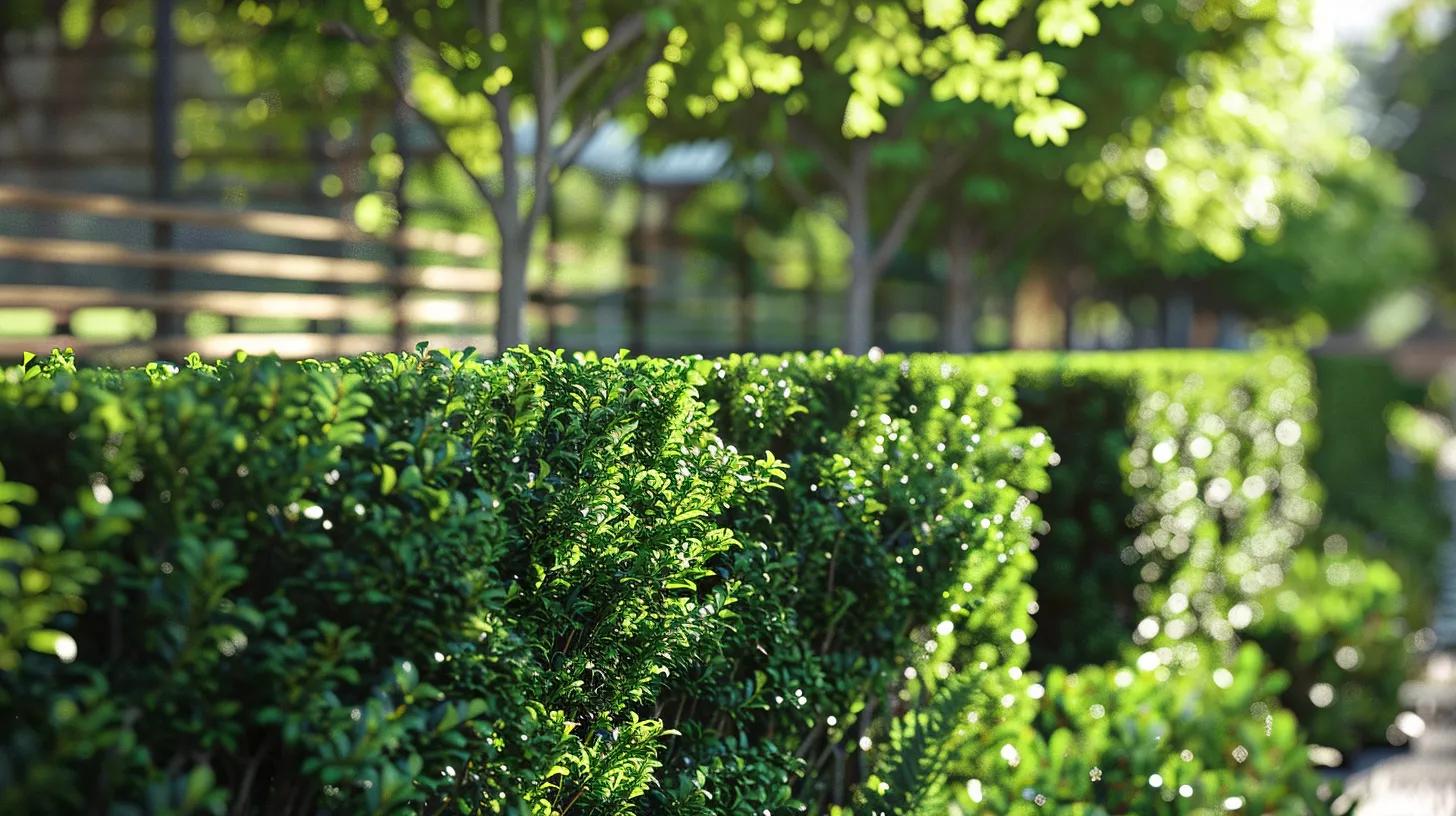
Utilizing evergreens from reputable nurseries guarantees year-round screening, structure, and wildlife habitat, with USDA data indicating that conifers like Thuja occidentalis maintain 80% foliage cover through winter. Selecting container-grown specimens from local certified nurseries—such as those accredited by the Arbor Day Foundation—ensures root integrity and faster establishment. Planting density of 3 to 5 feet on center for Thuja ‘Green Giant’ hedges delivers immediate privacy, while slower‐growing Picea pungens ‘Hoopsii’ (blue spruce) at 10-foot spacing forms a wind-break within three years.
Soil preparation with a 50/50 mix of composted bark and local topsoil improves drainage and nutrient retention. Integrating organic fertilizer—12-6-6 formula at 2 lbs per 100 sq ft—provides a balanced slow-release feed. Mulching with 2″ of shredded spruce bark preserves moisture and regulates soil temperature, reducing irrigation needs by 25% as demonstrated in Michigan State University field trials.
4. Showcasing Japanese Maple Trees as Focal Points in Hardscaped Gardens – Add Seasonal Color and Elegance
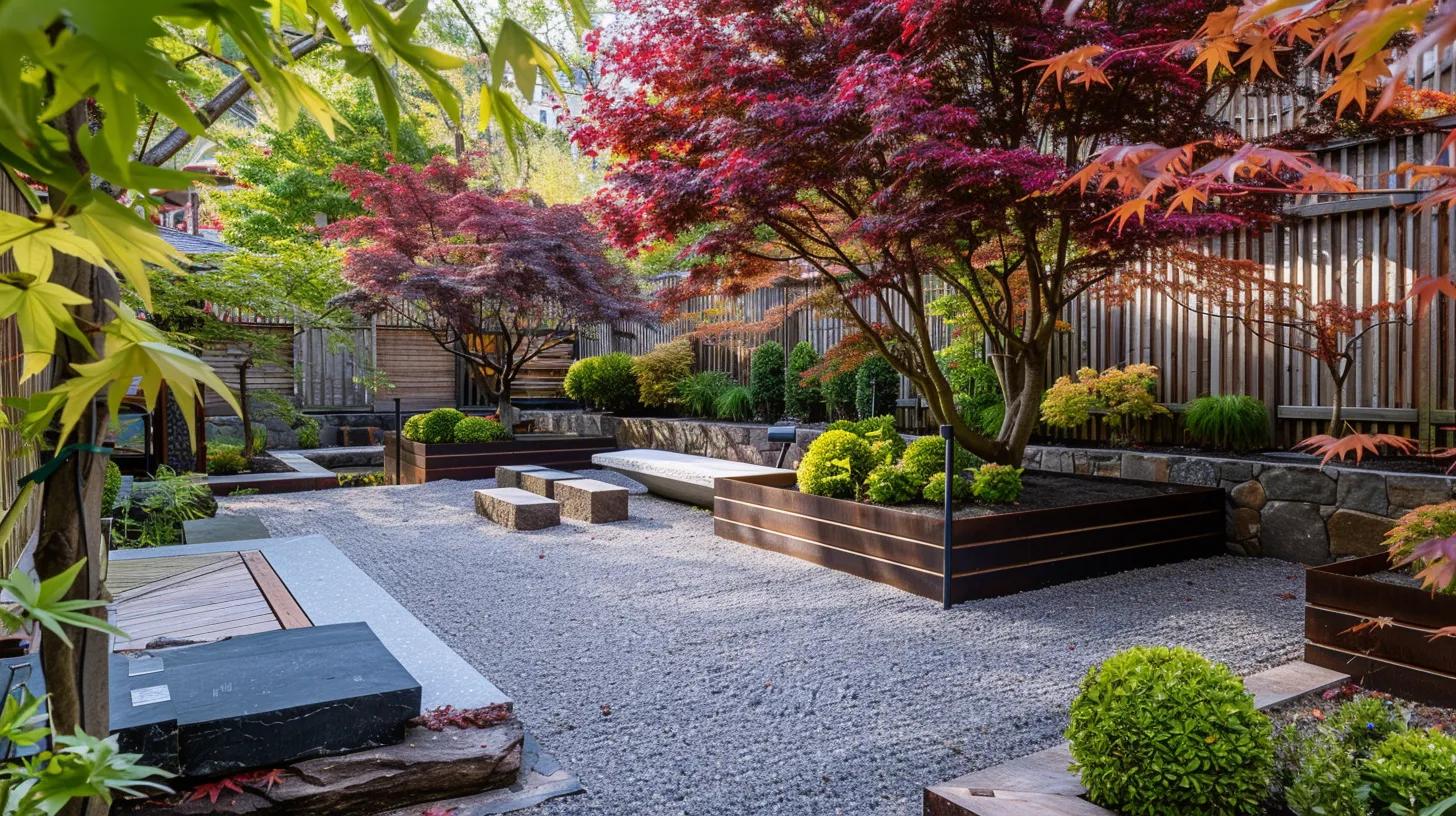
Showcasing Japanese maples (Acer palmatum varieties) as focal points elevates hardscaped gardens with vivid seasonal color, supported by a 2018 Rutgers study showing a 40% increase in property perceived value when maples are integrated into formal landscapes. Selecting cultivars like ‘Bloodgood’ for deep burgundy foliage or ‘Osakazuki’ for bright red fall color ensures year-round interest. Planting in raised stone planters integrates masonry and living elements, with 2-inch bark mulch and acid-adjusted soil (pH 5.5–6.5) promoting nutrient uptake.
Providing partial shade—using shade sails or overhead vine-covered trellises—prevents leaf scorch in afternoon sun. A drip irrigation system with 1-gph emitters placed 12″ from the trunk maintains consistent moisture without waterlogging shallow roots. When pruned selectively after frost, Japanese maples develop sculptural branch structures that complement gravel pathways and stone seating areas.
5. Creating Cohesive Yard Aesthetics With Combined Elements – Unify Hardscape and Softscape for Visual Flow
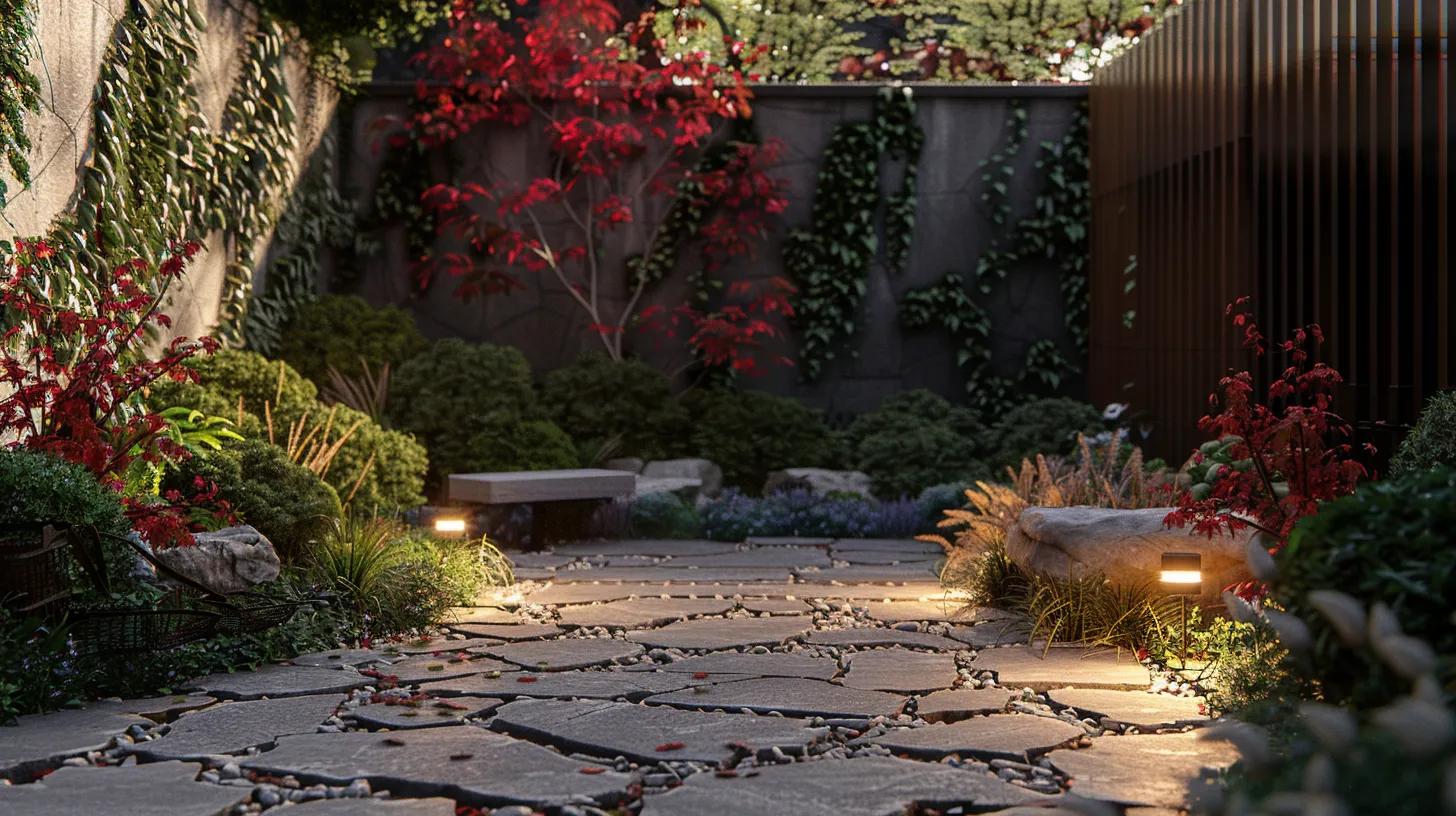
Creating cohesive yard aesthetics unifies hardscape and softscape by repeating materials and colors, as shown by a 2019 Texas A&M study indicating homeowner satisfaction rose by 35% when landscape elements echoed each other. Matching flagstone patio hues with riprap around the pond and gravel pathways creates a continuous palette. Introducing accent plants—such as burgundy-leaf heuchera—to echo Japanese maple foliage reinforces color harmony across garden zones.
Incorporate edging materials—Corten steel or bluestone—to define planting beds and maintain crisp lines between gravel and turf. Use 4″ steel edging anchored every 24″ to prevent gravel migration. By grouping vertical accents (evergreens) with low-growing softscape (groundcover junipers), the yard attains layered depth and invites movement. Finished with landscape lighting—12V LED uplights on trees and path lights with 3000K warm white—you highlight textures and ensure evening usability.
6. Practical Steps for a Successful Outdoor Transformation – Plan, Execute, and Maintain Your New Design
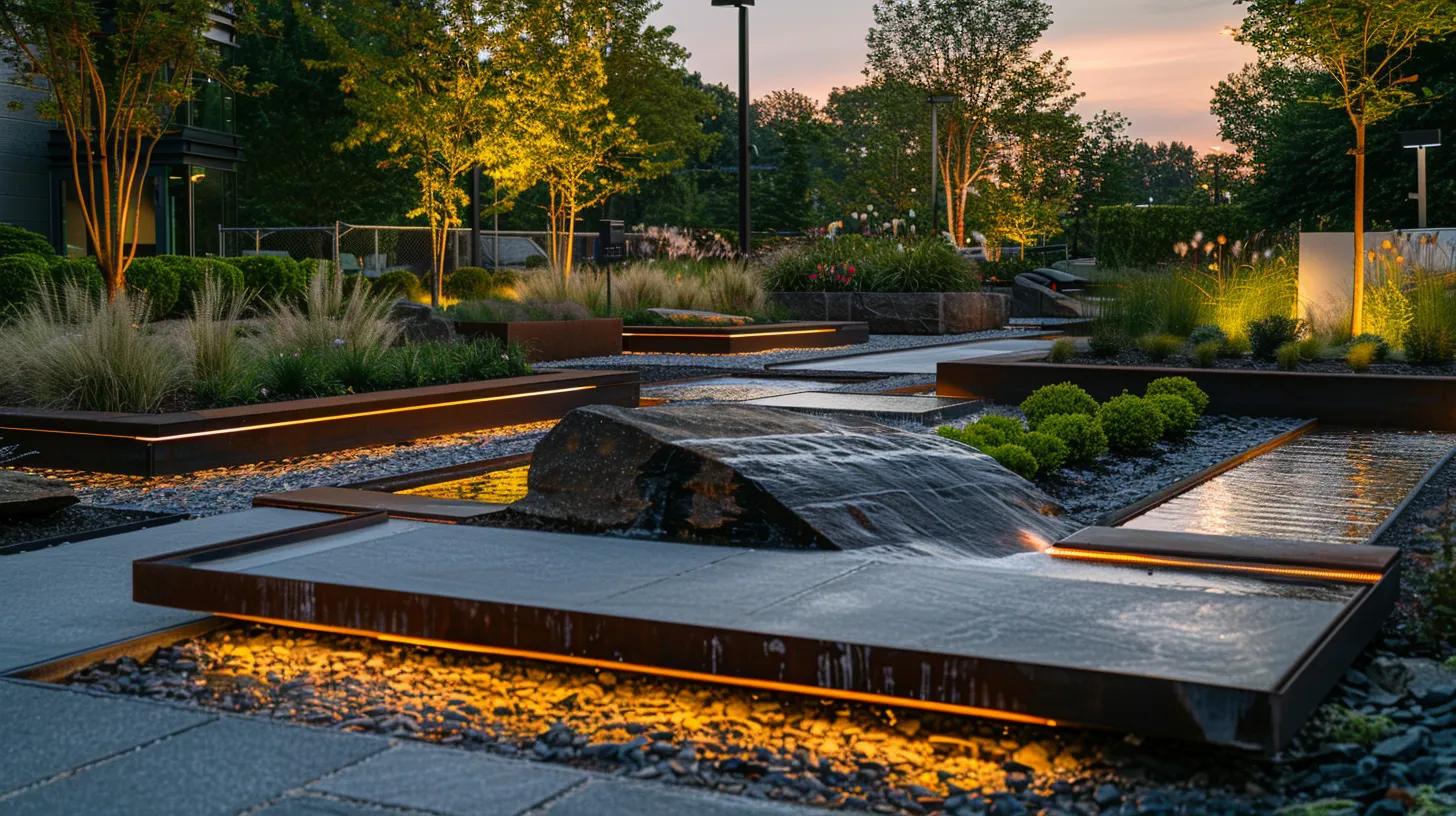
Practical steps for outdoor transformation begin with site analysis, budgeting, and phased installation backed by data from the National Association of Landscape Professionals showing 78% of projects finish on time when phased correctly. First, create a detailed site plan using scaled CAD drawings or garden design apps, marking grade changes and utility locations. Obtain materials—rock, gravel, liners, plants—from multiple suppliers like Webb Pond Supplies and local nurseries to compare prices and availability.
Execution phases:
- Excavation and grading: establish proper slope (2% grade away from structures)
- Hardscape installation: lay geotextile, rock base, retaining walls, and gravel paths
- Water feature assembly: liner, pump, filter, and plants
- Planting: evergreens, Japanese maples, groupings following the plan
- Finishing touches: mulch, edging, lighting
Ongoing maintenance includes seasonal pruning of maples, annual filter media cleaning, winter inspections of retaining walls, and mulching every spring. By tracking tasks with a digital calendar and partnering with local suppliers, the yard remains vibrant, structurally sound, and welcoming year after year.
Before reviewing the full strategy table below, note how each element interconnects to deliver structural integrity, ecological balance, visual continuity, and actionable steps.
Overview of Landscaping Elements and Their Benefits
| Element | Main Benefit | Key Materials/Supplies | Source Context |
|---|---|---|---|
| Rocks & Gravel | Erosion control & drainage | Crushed stone, landscape gravel, retaining blocks | Belgard, Allan Block |
| Water Gardens | Habitat & serenity | Pond liner, submersible pump, UV clarifier | Webb Pond Supplies, Little Giant |
| Evergreens | Privacy & year-round structure | Thuja occidentalis, Picea pungens | Arbor Day Foundation nurseries |
| Japanese Maples | Seasonal color & focal point | Acer palmatum ‘Bloodgood’, ‘Osakazuki’ | Local certified nurseries |
| Cohesive Design | Visual flow & value | Matching stones, plant repeats, LED lighting | Texas A&M landscape studies |
| Practical Execution | On-time completion & maintainability | Site analysis, phased scheduling, maintenance plan | National Assoc. of Landscape Professionals |
This table highlights how each element—from hardscape to plant selections—relies on specific materials, reputable suppliers, and best-practice guidelines to achieve a durable, beautiful yard. By viewing the project holistically, homeowners can coordinate phases and optimize budget allocation while ensuring professional-grade results.
How deep should I excavate for a retaining wall base?
Excavate to a depth equal to 10% of the wall height plus 6 inches of compacted stone base for stability.
What liner material lasts longest for water gardens?
EPDM rubber liners rated for 25-year UV resistance offer the best combination of flexibility and longevity.
How close can I space Thuja occidentalis hedges?
Plant Thuja ‘Green Giant’ at 3- to 5-foot intervals to form a dense privacy screen within two years.
When is the best time to transplant Japanese maples?
Transplant in early spring before bud break, ensuring root ball moisture and minimal shock.
How often should I clean my pond filter media?
Rinse mechanical filter pads monthly and replace biological media every 12 months to maintain water quality.
Implementing these six integrated strategies—rock and gravel installations, water garden features, evergreen plantings, Japanese maple focal points, cohesive material use, and phased execution—creates a backyard that balances beauty with structural integrity. Each component relies on proven materials and supplier partnerships to ensure lasting performance and visual appeal. By following the practical steps and maintenance guidelines, homeowners gain confidence in every phase from planning through seasonal care. The result is a stronger, more beautiful yard that enhances property value and invites enjoyment year-round.